
Structured Play vs. Free-For-All: What Quality Daycare Looks Like
Some daycares feel like a recess yard with no bell. Others run like a well-coached team practice; fun, energetic, but purposeful. The difference isn’t vibe, it’s structure. If you’ve ever picked up a dog who came home wired, filthy, and cranky, you’ve seen what “free-for-all” looks like. If you’ve picked up a dog who’s tired but relaxed, clean, and responsive to cues, you’ve seen structure at work.
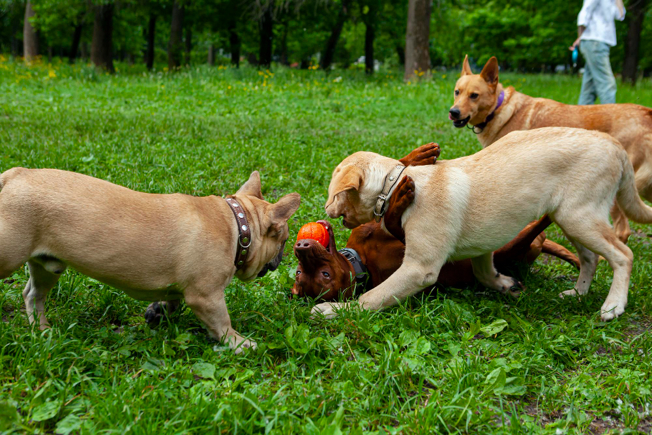
Some daycares feel like a recess yard with no bell. Others run like a well-coached team practice; fun, energetic, but purposeful. The difference isn’t vibe, it’s structure. If you’ve ever picked up a dog who came home wired, filthy, and cranky, you’ve seen what “free-for-all” looks like. If you’ve picked up a dog who’s tired but relaxed, clean, and responsive to cues, you’ve seen structure at work.
What “Structured Play” Actually Means
Let’s define it without jargon. Structured play is a planned, supervised, and time-boxed activity that balances arousal and recovery. Dogs are grouped by size and play style, not simply whoever showed up. Handlers know when to let things flow and when to throttle back. Sessions are short, varied, and intentional—think 15–30 minutes of social play followed by decompression and enrichment. That pacing keeps interactions positive and prevents the bad habits that show up when dogs are allowed to amp each other up indefinitely.
The facility matters too. A quality operation designs spaces for different energy levels and weather realities: climate-controlled indoor rooms, shaded or turfed yards, and quiet zones for breaks. If you’re evaluating options, tour a provider that offers both settings for appropriate rotation, like an indoor and outdoor dog daycare, and ask how they decide which dogs use which spaces and when. The answer should sound like a plan, not a shrug.
Staff training is non-negotiable. Handlers should read canine body language quickly: loose “play bows,” role-reversals, and self-interrupts signal healthy play; stiff postures, still tails, and prolonged mounting tell you trouble’s brewing. Good teams intervene early and redirect, rather than waiting for a scuffle. You should also hear clear policies about ratios and regrouping. When choosing a daycare, it is important to know the basics—cleanliness, secure fencing, and appropriate staffing to ensure safety. These simple items can reveal a lot about day-to-day operations when you see them in practice.
Where “Free-For-All” Goes Wrong
Unstructured environments rely on constant motion to “tire dogs out.” It works—until it doesn’t. Endless, high-arousal play leads to cranky dogs, rougher interactions, and the kind of reactivity that starts showing up at home. You’ll see the fallout as poor recall, nibbling or humping in excitement, and difficulty settling after pick-up. That isn’t “a good tired.” It’s a dysregulated nervous system.
Health policies are another stress test. A responsible daycare treats vaccination requirements as a living protocol, not a dusty sign on the desk. For example, boarding and daycare increase exposure risks for respiratory pathogens, so facilities often recommend or require non-core vaccines such as Bordetella and canine influenza in addition to core coverage. Other lifestyle-dependent vaccines are important considerations for dogs with regular daycare exposure, with task-force guidance on when to use them based on risk. Ask how the facility verifies records, handles outbreaks, and communicates with owners. A vague answer is a red flag.
Finally, look at the schedule. If the day is one long block of group play, it’s not a schedule—it’s a gamble. Quality programs build in decompression, enrichment, and naps. Free-for-alls skip the “boring” parts that actually make group play safer and more sustainable.
A 10-Minute Walkthrough to Audit Any Daycare
You don’t need a clipboard. You need a plan and a few pointed questions.
1) Start at the door. Is the lobby calm? Are arrivals and departures staggered, or are handlers trying to keep a lid on multiple leashed dogs in a tight space? Check the smell and housekeeping: clean floors, sanitized surfaces, and gear in good repair. Logbooks or tablets at the desk suggest staff track play groups, meds, and incident notes rather than winging it.
2) Look at grouping and traffic flow. Ask how they sort dogs: size, age, energy, and temperament should all factor in. Watch a transition: how do dogs move between rooms or yards? Controlled thresholds (one or two dogs through a gate at a time) prevent door-line tension and collisions.
3) Observe the play itself. You’re not judging excitement, you’re judging elasticity. Good play loosens and tightens like a rubber band: chase, pause, sniff, swap roles, re-engage. Handlers should reward breaks, not only action. If you see one dog doing all the chasing, another dog pinning repeatedly, or mounting that goes on and on, a handler should step in promptly.
4) Ask about ratios and training. There’s no universal law, but many solid programs keep social groups in the single digits per handler and adjust downward with higher arousal or less-experienced dogs. The key: ratios flex with the group, not the other way around. Ask how the team is trained to read body language and de-escalate. You’re listening for specifics, such as hand signals, name recognition, space-making techniques, not “we just keep an eye on things.”
5) Check rest and enrichment. Where do dogs nap? What does decompression look like? You want quiet rooms with visual barriers, fresh water, and soft surfaces. Enrichment shouldn’t mean sugar-high chaos. Look for food puzzles, scent games, simple obedience refreshers, or mat work. Short, brainy sessions help dogs come down from social play so they’re able to nap deeply.
6) Review health protocols. Who verifies records? How do they handle coughs or soft stools? Do they require a waiting period after vaccines or illness? AAHA’s risk-based approach to non-core vaccines is a useful reference point when you discuss policies; a serious facility will be conversant with that kind of guidance and ready to explain its stance.
7) Safety basics. Fencing should be secure and tall, with double-gate entries. Toys should be intact; slip leads and air horns should be visible but not used as a first resort. Floors ideally are rubberized or non-slip sealed concrete. Fresh water is available in multiple places, and bowls are cleaned between groups.
8) Communication and incident handling. Ask for a sample report card or end-of-day summary. A good note-taker notes who your dog played with, how breaks went, and any training focus. If there’s a minor scuffle, you should expect a timely call, a written incident report, and a clear plan for regrouping on the next visit.
What a “Structured” Day Feels Like for a Dog
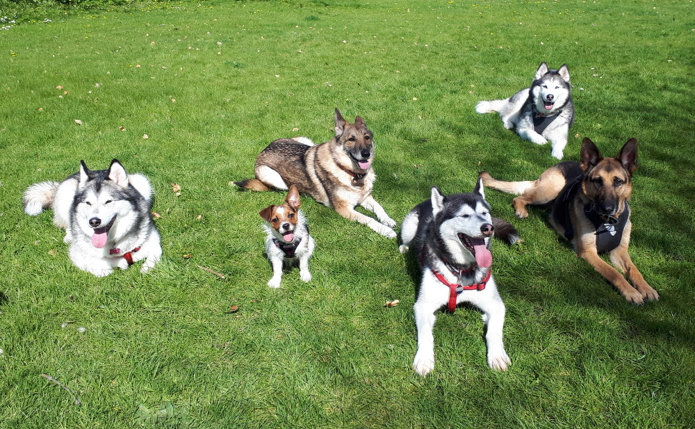
To make this concrete, here’s a sample cadence you might hear from a well-run program. No two facilities are identical, but the rhythm is what matters.
Morning ramp-up (8:00–10:30). Arrivals are staggered. Each new dog checks in through a calm lobby and is routed to a holding area for a quick settle, then matched to a group. First play windows are short: a sniffy yard walk, then 15–20 minutes of small-group play. Handlers cue gentle “downs” and scatter feed for a reset. Water breaks are built in.
Midday decompression (10:30–1:30). Group rotation continues, but emphasis shifts to enrichment and rest. Dogs cycle through scent games (find the treat box), place training on mats, and crate or room naps with white noise. This is where high-arousal dogs learn to come down—something many owners struggle to teach at home.
Afternoon polish (1:30–4:00). A second social block happens, usually with lower energy than morning. Handlers curate compatible pairs or trios rather than large packs. Out-the-door prep starts early: short leash walks to reset, quick wipe-downs, and a quiet hold before pick-up so dogs transition home in a thinking state, not a frenzy.
A free-for-all, by contrast, compresses all of this into one long blur: under-supervised groups, minimal redirection, and little to no decompression. Dogs appear “exhausted,” but they haven’t practiced any skills. That’s why you sometimes see more reactivity after a few weeks of chaotic daycare than you did before you started.
How Owners Can Help Daycare Work Even Better
Daycare isn’t a magic wand. It’s a partnership. A few practical habits make a noticeable difference:
Match your dog to the right days. High-drive dogs do better two or three times a week with rest in between. Seniors and shy dogs often thrive on half days or enrichment-heavy schedules with limited group play. Quality facilities will make tailored recommendations and won’t hesitate to suggest alternatives if full-day play isn’t a fit.
Keep training cues aligned. Share a short list of cues your dog knows (“name,” “leave it,” “go to mat”) so handlers can stay consistent. Ask what cues they use and practice them at home. That continuity helps your dog generalize manners in a stimulating environment.
Maintain health records proactively. Send updated vaccine records before they expire, and keep your vet looped in about your dog’s attendance. Risk-based, non-core coverage like Bordetella or canine influenza isn’t about checking a box; it’s about reducing the odds that a fun social day sets back your dog’s health.
Ask for feedback and listen. If staff flag patterns (over-arousal at noon, resource guarding around toys), treat it as valuable data. The best facilities want your dog to succeed and will suggest tweaks, maybe different playmates, more decompression, or a different program track.
The Bottom Line
Quality daycare looks like intention, not chaos. Structured play balances energy with recovery, uses skilled supervision, and treats health policies as part of behavior management, not paperwork. If you walk through with a critical eye and ask a few smart questions, you’ll spot the difference quickly. Choose structure, and your dog comes home not just tired, but better practiced at being the companion you live with.


 Mohsin Khan

