
Dog Daycare Safety: What Dog Owners Should Look For
Choosing a dog daycare isn’t about finding the biggest room or the lowest rate—it’s about structure. Safe programs have clear intake steps, well-matched play groups, and health rules that actually operate on the floor, not just on paper. If a facility can’t explain how it tests temperament, manages arousal, and responds to coughs or scuffles, you have your answer before your dog ever steps through the door.
Choosing a dog daycare isn’t about finding the biggest room or the lowest rate—it’s about structure. Safe programs have clear intake steps, well-matched play groups, and health rules that actually operate on the floor, not just on paper. If a facility can’t explain how it tests temperament, manages arousal, and responds to coughs or scuffles, you have your answer before your dog ever steps through the door.
Temperament Testing That Predicts Safe Play
Quality programs measure behavior, not vibes. They document approach–retreat patterns, stiffness near resources, sudden stillness during play, and changes in ear/tail carriage when a chase line forms. They also retest. Puppies mature fast; adolescents push boundaries; adults can become more selective. Ask how often reevaluations happen and what triggers them—incident reports, new guarding around toys, or a rise in vocalization are common review points. A pass one year isn’t a lifetime license; the file should evolve with the dog.
A meaningful temperament test is staged, not rushed. It starts in a quiet area to read baseline behavior with a single handler. Then it adds one calm “helper” dog for parallel walking and short greetings. Only after the dog shows relaxed body language—soft eyes, loose jaw, curved spine, normal breathing—does a second helper with a different play style enter the picture. Between each step, the handler pauses so arousal can drain. The goal isn’t to “make” a dog pass; it’s to learn whether group play adds to the dog’s welfare or subtracts from it.
Good intake ends with a plan. Some dogs thrive in full groups; others do best with shorter play blocks or one-on-one enrichment. The right facility will say so plainly and recommend an initial schedule that matches your dog’s arousal threshold, not the facility’s staffing convenience.
Building Groups That Stay Safe: Style, Ratio, and Routine
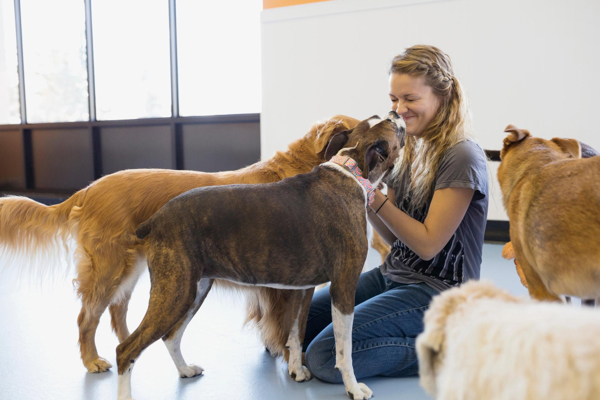
The safest rooms aren’t “small dogs” versus “big dogs.” They’re play-style rooms. Wrestlers who like body contact don’t belong with chasers who prefer high-speed arcs, and neither should overwhelm a soft-social dog that enjoys sniff-and-stroll time. Handlers should place dogs by energy, sociability, and conflict history, then rotate them through short play bouts, decompression breaks, and low-arousal enrichment. If a program describes supervised dog daycare with compatible groups and routine interruptions before play tips over the threshold, that’s exactly what you want to witness on your tour.
Ratios matter—but judgment matters more. A single handler with eight mellow seniors is different from a single handler with eight adolescent athletes. Expect to hear that ratios tighten as arousal rises, that new dogs start in smaller pods, and that handlers have authority to split a room the moment play loses balance. Watch for proactive moves: body blocks to stop a chase line, name recalls before pinning, and scatter-feeds to shift focus without confrontation.
Facilities should engineer the room for safety. Rubberized, non-slip floors reduce soft-tissue injuries during sharp turns. Visual barriers let dogs exit the action line when they need a breather. High-value items such as chews or tossed balls belong only in controlled micro-sessions, never as free-for-all room toys. The schedule should alternate activity with rest; hours of continuous, amped-up play lead to scuffles on-site and meltdowns at home.
Health rules must reflect real-world risk. Respiratory diseases spread quickly in social settings, which is why daycare and boarding exposure factors into vaccine planning in the AAHA Canine Vaccination Guidelines that veterinarians use to tailor risk-based recommendations for individual dogs. If a facility’s vaccine policy deviates substantially, ask what compensates for that risk—ventilation upgrades, isolation rooms, strict symptom screening at drop-off, and staff training on when to pull a coughing dog from a group are all relevant answers.
Red Flags You Can Spot in Five Minutes
No written intake criteria is a deal-breaker. “Any friendly dog” isn’t a policy; it’s a liability. You should see a behavior questionnaire, a trial day, and a documented go/no-go decision with notes about group fit and length of stay for the first week.
Crowding that stays chaotic is another hard no. Constant, unresolved barking and handlers standing still while chase lines form signal unmanaged arousal. In a well-run room, you’ll see early, calm interruptions that reset the tone before rough play escalates. You’ll also see deliberate rest: dogs on mats behind barriers or in quiet zones to lower heart rate and respiration.
Punitive handling raises risk. Leash pops, alpha rolls, or shouting teaches dogs to suppress warning signals and often turn short scuffles into true fights. Professional teams use low-drama skills: quiet recalls, brief leashing to breathe, stationing on beds, or swapping to sniff-and-search games until bodies loosen again.
Weak illness protocols should make you walk. Canine influenza, also known as dog flu, spreads in close quarters like boarding kennels and daycares; the CDC notes that outbreaks have moved rapidly through social facilities when symptomatic dogs were not isolated and when contact reduction failed. Ask to see the protocol for a mid-day cough: who moves the dog, where isolation happens, who gets called, and when pick-up is required.
No incident reporting, no trust. Even excellent programs see occasional dust-ups. What matters is documentation and change. A credible report includes antecedents, escalation signs, de-escalation steps taken, any injuries, and a concrete plan for next time—different pod, shorter sessions, added handler, muzzle training for resource work, or a temporary break from group play.
Your Role in Keeping Daycare Safe
Tour with purpose, not politeness. Stand quietly for a few minutes and watch one room. Are bodies loose with frequent role reversals, or do you see persistent pinning and shadowing? Do handlers move and narrate decisions—“I’m splitting that pair before they creep into neck biting”—or are they glued to a phone? Ask why each dog is in that room and what would trigger a mid-day move.
Ask about the day’s rhythm. How long is each play block? Where do dogs rest, and how is rest enforced for the dog who won’t lie down? What replaces constant play—sniffing courses, foraging mats, short training reps that reward stillness? The best programs send dogs home pleasantly tired because arousal was cycled, not because they were flooded.
Be honest during intake. Tell the staff about sensitivities: guarding around bowls, unease with intact males, fence-line frustration, or a history of respiratory bugs after busy weekends. Daycare isn’t a place to fix problems; it’s a place to manage them—or to learn that your dog prefers smaller groups or enrichment-only days. If your dog returns hoarse or coughs after peak holiday weeks, ask about lower-density schedules until local respiratory pressure eases; pair that with your veterinarian’s guidance on risk-based vaccination timing.
If your dog doesn’t love group play, don’t force it. Many great dogs dislike crowded rooms. A professional program will build an alternative day: short nature walks, nose work, puzzle feeding, and handler-led decompression. Your dog’s welfare comes first; the answer shouldn’t be “he’ll get used to it.”
One Visit, One Decision: What to Confirm Before You Book
When policies meet practice, the room feels calm. Handlers move with intention, interrupt early, and rotate between action and rest. Dogs look relaxed, not wired. Intake notes match what you see: the adolescent sprinter is in a chaser-friendly pod; the soft-social senior is with gentle greeters; the wrestler has a handler shadowing before play gets chesty. Health checks happen at the door; a mild cough triggers isolation, cleaning, and owner contact according to a written plan aligned with public guidance on respiratory disease dynamics in canine social settings. If a facility can explain these systems clearly and show them in action, you’ve probably found the right fit.
Conclusion
Safe daycare is designed, not assumed. Choose the program that tests temperament in stages, groups by play style, rotates activity with rest, and enforces health protocols backed by veterinary guidance and public-health basics. Do that, and you’ll protect your dog’s body, mind, and love of play—today and over the long run.


 Fay Smith

