

Breed DNA Testing
Canine breed DNA test results can sometimes be confusing, especially when they raise questions about a dog’s purity or pedigree. Even more so when you get conflicting information from different testing companies, which is common. However, understanding how these tests actually work will help to make sense of the confusing or conflicting results you may have received.
Breed DNA Facts
Canine breed DNA tests are useful tools for understanding ancestry and genetic traits, but they are not definitive proof of breed purity. Registry classifications are based on documented lineage and verified parentage rather than probability-based genetic estimates.
For this reason, CKC does not rely on DNA testing alone to determine breed purity.
A purebred dog is not just one thing, but a sum of many parts. Instead, "purebred status" encompasses the entire dog, including: parents, history, lineage/pedigree, conformation, temperament, and purpose.

To help make sense of results, it may be helpful to explain how breed DNA testing actually works and why these tests are not designed to determine whether a dog is truly purebred, as stated on both Embark and Mars Wisdom Panel websites.
This happens so frequently that both of these major testing facilities explicitly state that these tests should not be used to determine a dog's purebred status, as purebred dogs can, and often do, have results that don't align with the "purebred" sample pools that they pull from. This can result in a dog's results appearing not purebred.
How Canine Breed DNA Tests Work
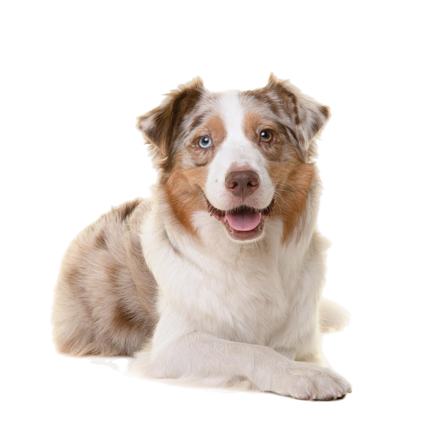
Companies like Embark and Mars Wisdom Panel analyze a dog’s DNA by examining thousands of specific locations across the genome called genetic markers. These markers are small, identifiable segments of DNA that tend to vary across dog populations.
Testing companies build large internal reference databases made up of DNA samples from dogs they classify as representatives of particular breeds. When your dog’s DNA is tested, the company compares your dog’s genetic markers to the markers found in their database. Different testing companies use different sample pools. Some may include more or fewer foreign and domestic lines, and none include all lines; all facilities have only a partial picture, not a complete picture of an entire breed's DNA profile.
Each company uses unique, proprietary statistical models, algorithms, and interpretation formulas to estimate which breed populations your dog’s markers most closely resemble.
Because different companies use different sample pools, their own unique algorithms, and methods of interpretation, the results often differ. The same happens when people test their DNA through the major human DNA testing companies. You will very likely get different results from Ancestry, 23andMe, and MyHeritage.

In simple terms, the test does not “read” a breed label in the DNA, or "measure" how purebred a dog is. Instead, it calculates probabilities based on similarities to the company’s internal reference groups.
What Genetic Markers Actually Represent
Genetic markers are not “breed genes,” or even "purebred genes". They are simply points of variation (mutations) in DNA that are more common in certain populations.
Many breeds share genetic markers because:
- Modern dog breeds were developed from shared ancestral stock.
- Some breeds were historically cross-developed.
- Genetic traits can persist as hidden recessive traits for many generations.
- Certain physical traits (e.g., ear shape or coat type) are controlled by genes shared across multiple breeds
Because of this overlap, a marker associated with one breed may also appear in another breed.

Why DNA Tests Are Not Used to Determine Purebred Status
There are several reasons for this:
Shared Genetic Heritage Among Breeds:
For these reasons, testing companies themselves do not recommend using breed DNA tests as the sole basis for determining whether a dog is purebred. They are designed to provide insight into genetic ancestry and traits, not to override documented lineage records.
Why Results May Differ Between Companies
It is not uncommon for a dog to receive slightly (and sometimes vastly) different breed percentages from Embark versus Wisdom Panel, versus other companies.
These differences do not necessarily mean one test is "wrong." They simply reflect the scientific reality that these tests are statistical tools built on proprietary methods.
This happens because:
- They test different markers
- They compare to different databases
- They use different statistical modeling
- They interpret overlapping markers differently

Breed DNA Tests Preferred by CKC
