
How Long Are Dogs Pregnant?: A Weekly Guide for Expectations, Care, & Nutrition
This guide covers everything from the first signs of pregnancy to the final days before labor, with a clear week-by-week breakdown and practical advice at every stage.
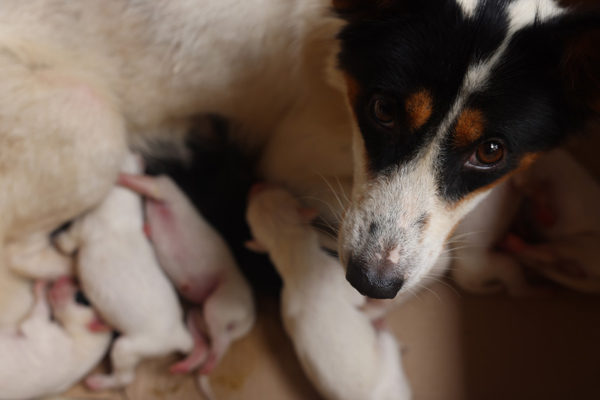
If your dog has recently been bred, or if you suspect she might be pregnant, one of the first questions that comes to mind is: how long does a dog pregnancy actually last? Unlike humans, who carry babies for nine months, dogs have a much shorter gestation period. But what happens inside those nine weeks is remarkable, and understanding it week by week can help you give your dog the best possible care during one of the most important stages of her life.
This guide covers everything from the first signs of pregnancy to the final days before labor, with a clear week-by-week breakdown and practical advice at every stage.
The Short Answer: How Long Are Dogs Pregnant?
The average gestation period for dogs is 63 days from ovulation, though it can range from 58 to 68 days. While breed and body size do not significantly change the length of pregnancy, smaller breeds may deliver slightly earlier, and larger breeds may carry closer to or past the full 63 days.
It is important to understand that the 63-day timeline is measured from ovulation, not from the day of mating. Because dogs can mate several days before or after ovulation actually occurs, the date of breeding alone is not always a reliable way to calculate the due date. This is why veterinary confirmation is essential.
How to Confirm Dog Pregnancy
There are several reliable methods veterinarians use to confirm pregnancy, and each is most accurate at a different stage.
-
Relaxin blood test: A blood test that detects the hormone relaxin, which is produced only during pregnancy. It is reliable from around 21 to 30 days after conception.
-
Abdominal ultrasound: Can detect developing embryos as early as 21 days. It is most useful between 25 and 35 days of gestation and can also check fetal heartbeats.
-
Abdominal palpation: A veterinarian may gently feel the abdomen around day 28 to 35. This requires experience and should never be attempted at home.
-
X-ray: Fetal skeletons become visible around day 45. X-rays are most useful later in pregnancy for counting puppies and planning for whelping.
If you suspect your dog is pregnant, schedule a veterinary visit around three to four weeks after breeding for the most accurate early confirmation.
Week-by-Week Breakdown of Dog Pregnancy
Week 1: Fertilization (Days 1 to 7)
After mating, fertilization occurs within the first two to three days. The fertilized eggs begin to divide and move toward the uterus. During this week, there are no visible changes in your dog. She may show very subtle shifts in behavior, such as mild lethargy or a slight change in appetite, but most owners notice nothing at all. Normal feeding, exercise, and routine should continue without change.
Week 2: Implantation Begins (Days 8 to 14)
The embryos continue to divide and travel through the uterine horns. Your dog still shows no visible signs of pregnancy. This is a critical week for embryo development, so avoid any unnecessary stress, medications not approved by your vet, or exposure to toxins and chemicals. By around day 16, they begin to embed in the uterine lining.
Week 3: Embryos Implant (Days 15 to 21)
Embryos are now implanted and beginning to develop rapidly. Some dogs experience a brief period of morning sickness during this week, including mild nausea, decreased appetite, or occasional vomiting. This is temporary and normal. If vomiting is frequent or the dog appears unwell, contact your veterinarian. A blood test for the hormone relaxin can confirm pregnancy from around day 21.
Week 4: Major Development Begins (Days 22 to 28)
This is one of the most important weeks in puppy development. By day 22, the feus begins to take shape. Around day 29, a veterinarian can confirm pregnancy and may detect fetal heartbeats via ultrasound. The eyes, spinal cord, and facial features begin to form. The mother’s nipples become enlarged and slightly darker as the body prepares for nursing. During this week, some dogs become more affectionate, while some may become more withdrawn.
This is also when a gentle abdominal palpation by a trained veterinarian may be possible. Avoid pressing on the abdomen yourself, as this can harm the developing embryos.
Week 5: Puppies Take Shape (Days 29 to 35)
The embryos are now called fetuses. By day 35, the puppies have distinct limbs, paws, claws, and whisker buds. The organs continue to develop rapidly. Your dog will begin to show a noticeable increase in appetite. Weight gain becomes visible, and the belly starts to enlarge. Begin transitioning her to a high-quality puppy or pregnancy food if your veterinarian recommends it. Water intake will also increase.
Week 6: Rapid Growth (Days 36 to 42)
The fetuses grow significantly in weight during this week, sometimes up to 75 percent heavier than the previous week. Coats begin to develop, and the skeletons are forming. Your dog's belly is now clearly visible and growing. She may become uncomfortable depending on litter size and may prefer smaller, more frequent meals rather than large portions. Limit strenuous exercise and avoid rough play. Gentle walks are ideal.
Week 7: Puppies Almost Fully Formed (Days 43 to 49)
By day 45, fetal skeletons are visible on X-ray, which is useful for counting how many puppies to expect. The puppies are almost fully developed by day 50, with complete skeletons, claws, and developing coats. Your dog may begin nesting behavior, such as scratching at blankets or seeking out quiet corners. Increase her food intake gradually, up to one and a half times her normal amount, divided into three or four smaller meals per day.
Week 8: Final Preparations (Days 50 to 56)
The puppies are fully formed and continuing to grow in size. Your dog will be noticeably uncomfortable and may have difficulty settling. Her belly is large and firm. She may lose her appetite in the final days. This is a good time to set up her whelping box in a quiet, warm, dark area away from other household pets. Introduce her to it early so she feels comfortable and safe.
Your veterinarian may recommend a final abdominal X-ray during this week to confirm the puppy count and assess their position for whelping.
Week 9: Labor Approaches (Days 57 to 65)
Puppies begin moving into the whelping position in the birth canal. Your dog may become restless, panting, pacing, or refusing food. Her body temperature will drop below 100 degrees Fahrenheit approximately 12-24 hours before labor begins – a reliable sign that birth is imminent. Have your veterinarian on call in case of complications.
Quick Reference: Week-by-Week Summary
|
Week |
Days |
Puppy Development |
What to Do |
|
Week 1 |
Days 1-7 |
Fertilization, cell division |
Normal routine |
|
Week 2 |
Days 8-14 |
Embryos travel to uterus |
Avoid stress and toxins |
|
Week 3 |
Days 15-21 |
Implantation, mild nausea possible |
Relaxin test possible |
|
Week 4 |
Days 22-28 |
Eyes, spine forming, heartbeat |
Ultrasound confirmation |
|
Week 5 |
Days 29-35 |
Limbs, claws, whiskers forming |
Increase food gradually |
|
Week 6 |
Days 36-42 |
Rapid weight gain, coat developing |
Smaller frequent meals |
|
Week 7 |
Days 43-49 |
Almost fully formed, skeletons visible |
X-ray for puppy count |
|
Week 8 |
Days 50-56 |
Fully formed, growing in size |
Set up whelping box |
|
Week 9 |
Days 57-65 |
Moving into birth position |
Watch for labor signs |
For additional reading on canine health and care, check out a detailed companion guide on this topic.
Warning Signs to Watch For During Pregnancy
Most dog pregnancies progress without complications. However, contact your veterinarian immediately if you notice any of the following.
-
Heavy vaginal bleeding or unusual discharge at any stage
-
Persistent vomiting beyond week three
-
Complete loss of appetite lasting more than two days
-
Fever above 102.5 degrees Fahrenheit
-
Extreme lethargy or difficulty breathing
-
Active labor lasting more than two hours without a puppy being born
-
More than one hour passing between puppies during delivery
Nutrition and Care During Pregnancy
What your dog eats during pregnancy directly affects the health of her puppies. During the first four weeks, her regular diet is usually sufficient. From week five onward, food intake should increase gradually, reaching up to one and a half times her normal amount by the final weeks. Feed small, frequent meals rather than one or two large portions, especially in the last trimester when the puppies take up significant space in her abdomen.
Choose a high-quality food formulated for pregnancy or puppy growth, as these contain elevated protein, calcium, and calorie levels needed to support fetal development and milk production. Always provide fresh, clean water, as water intake increases significantly during pregnancy.
Avoid supplementing with calcium during pregnancy unless specifically directed by your veterinarian. Excessive calcium supplementation can interfere with the body's natural hormone regulation during labor and increase the risk of complications.
Preparing for Whelping
The whelping area should be set up by week eight and placed in a quiet, warm, low-traffic area of the home. Use a sturdy whelping box large enough for your dog to stretch out comfortably, with low sides she can easily step over, but high enough to keep newborn puppies safely contained.
Line the box with clean, absorbent material that can be changed frequently. Keep the room temperature between 75 and 85 degrees Fahrenheit for the first week after birth, as newborn puppies cannot regulate their own body temperature.
Final Thoughts
Dog pregnancy lasts approximately 63 days from ovulation, divided into nine remarkable weeks of development. From the moment of fertilization to the final hours before labor, each week brings significant changes for both the mother and the puppies growing inside her. Knowing what to expect at each stage helps you provide the right care at the right time, catch potential problems early, and prepare confidently for the arrival of a new litter.
If you are unsure whether your dog is pregnant or if you have any concerns at any point during her pregnancy, your veterinarian is always the best first resource. Regular checkups, proper nutrition, and a calm, prepared environment make all the difference for a healthy pregnancy and a smooth delivery.
Because a well-supported mother raises the healthiest puppies.


 Max Jay

