
Preventing Matted Fur: How to Get Knots Out of Your Dog’s Hair
Almost every dog owner has experienced their dog's fur becoming knotted or matted, especially those with long-haired breeds. When knotted fur isn't cared for, mats can become a significant factor affecting a dog's health.
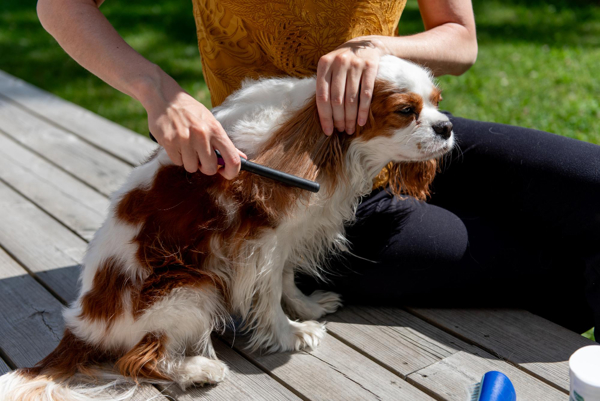
Almost every dog owner has experienced their dog's fur becoming knotted or matted, especially those with long-haired breeds. When knotted fur isn't cared for, mats can become a significant factor affecting a dog's health.
A dog's coat isn't just an accessory; it's also a protective barrier for its skin. Therefore, when dealing with knotted or matted fur, the dog's comfort and safety should be prioritized.
Reasons a Dog's Fur Gets Knotted and Matted
Lack of Regular Grooming: Without regular daily grooming, shedded dead hair will entangle with live hair during the dog's daily activities, knotting and eventually forming mats.
Daily Exercise: In areas where dogs frequently rub against each other during daily activities, such as the armpits and inner thighs, repeated friction can easily cause hair to tangle.
Wet Fur: If fur isn't combed before bathing or swimming, slightly tangled hairs will become tighter, leading to the development of mats.
Shedding Season: Double-coated breeds (Golden Retrievers, Border Collies) shed a lot of fur during shedding season. If not dealt with properly, this hair can get trapped between the new growth.
Are Knots and Mats Painful for Dogs?
Tangled hair is a common problem in dogs. Without regular grooming, or after playing outdoors, especcially in wet or grassy areas, fur easily becomes matted.
If the matting isn't addressed properly in its early stage, it will worsen and start to pull. Because a dog's skin is thin, this continuous pulling will exacerbate the strain with every movement, causing the dog pain.
In severe cases, a mat can harden into a closed space, trapping moisture, heat, and bacteria, leading to skin redness, swelling, and various skin diseases.
Preventing Matting: What to Use for Knots in Dog Hair
To effectively and safely remove knots from a dog's fur, there are different combinations of tools and methods you can use to minimize the dog's discomfort during the process.
Untying tools
Use a detangler spray (or leave-in conditioner/smoothing spray/corn starch) to lubricate and soften the hair before dealing with the knots.
A pin brush is great for the daily maintenance of long or silky coats.
Utilize a needle brush (or slicker brush) for the grooming needs of curly or wire-coated breeds. This tool has fine, angled wires that can separate tight curls. When using it, you should remember that this brush is effective because it reaches the skin, meaning that your technique should remain gentle first and foremost.
Combs will thoroughly investigate any remaining hidden knots.
To safely penetrate dense fur and tangles from thick-coated dogs, use an opening rake (also called an undercoat rake). This tool generally has rounded metal pins that focus in removing looser hair in the undercoat, while gliding over the overcoat. Perfect for shedding season!
Having a pair of blunt-end scissors on hand can help safely cut a knot out of the fur, and are great for avoiding any accidental snips or slices to the dog’s skin! You should slowly cut from the junction of the skin and hairline.
Gradual separation
Assess: Gently lift the knotted fur. If the skin follows, the knot is very tight and no longer suitable for regular brushing. Forcing it can cause serious consequences, such as skin tearing. If this is the case, it is recommended to use electric clippers to shave the hair or seek professional help to minimize the dog's discomfort.
Step 1: Before cleaning the matted hair, gently separate the softened knots with your hands to reduce their size and density. When separating the knots, be sure to pinch the hair root (between the knot and the skin) with your thumb and forefinger. This ensures that the pull is absorbed by your hand, not the dog's hair follicle.
Step 2: Use a knot-removing rake or similar tool to cut vertically along the direction of hair growth, further reducing the size and density of the knots until they are small enough to be combed with a pin brush.
Step 3: Gently pat the hair with a long pin brush, pulling it slightly outwards, and then comb from the ends down to the roots.
How to Get Knots Out of Dog Hair Behind Ears
Brushing the hair behind a dog's ears requires extra care, as the skin there is very thin, extremely sensitive, and full of blood vessels. Even slight mishandling can cause painful brushing wounds or skin tears.
Before using tools, try gently "parting" any clumps with your fingers. Pull the clumps horizontally, not from the head outwards.
When brushing, place your thumb and forefinger at the base of the hair, applying a full pull with your fingers. The dog should not feel any pressure other than your fingers pinching its ear.
How Do You Remove Severely Matted Fur?
First, you need to assess the severity of your dog's matted fur in order to choose the appropriate treatment method.
Degree Assessment
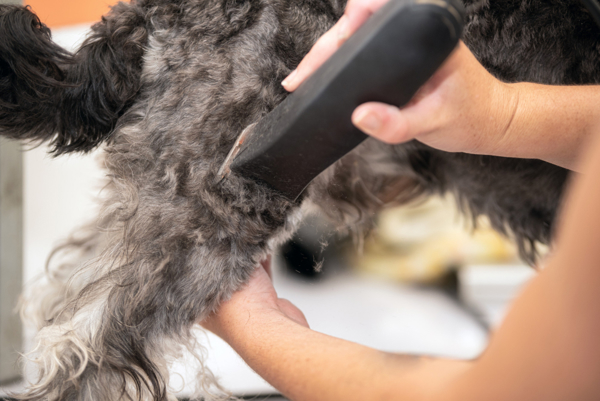
Some dog owners may wonder, "Should I trim the mats in my dog's fur with scissors?” While that may work for knots, trimming matted hair often takes too long, with both the owner and dog losing patience. Not only that, but scissors can slice the dog's skin, causing more pain in the already affected area. Often, the best way to remove mats at home is with professional electric clippers.
When fur becomes severely matted, the skin is in a state of extreme sensitivity and 'suffocation.' Do not attempt to untangle it, as this can cause serious harm to your dog. Seek professional help.
Preparation
Unlike dealing with minor tangles, you should not attempt to soften mats by dampening the hair. As mentioned before, tangled hairs will become tighter and form more mats when wet.
For smaller or looser mats, owners can attempt to detangle them with untying tools. For larger mats, cutting or clipping is going to be best.
Safety When Cutting or Clipping
Always remain cautious while doing any sort of trimming or cutting of your dog’s fur.
Tips to remember:
-
Scissors should never be right on the dog’s skin; always keep the blades at a small distance away.
-
Make sure the dog is not frightened and accustomed to the sounds and movements that come with using electric clippers. It is also important to note that some clippers may warm up while in use.
-
Both the owner and the dog must stay calm during the process. Exercise or playing before the grooming session can help expend a dog’s energy. Keep the dog relaxed by providing a peaceful, comfortable area and plenty of praise.
-
Take it slow! This is not a process that should be rushed. Doing so can cause pain, fear, or even aggression in a dog that is likely already uncomfortable.
Professionals will immediately examine the area after shaving to assess for reperfusion injury—the sudden return of blood to the constricted area, which can cause localized swelling and discomfort. This professional assessment cannot be provided by home care.
Summary
Don't wait until the matted fur has become irreparable before addressing it, as this can cause serious harm to your dog.
Dog grooming should be viewed as essential and approached from a health perspective. It's advisable to keep some common grooming tools at home for emergencies.


 Muhammad Saad

