
How to Train a Dog Not to Beg: Your Beg-Free Mealtime Guide
A dog begging may seem like a harmless thing. Those cute puppy begging eyes under the table are hard to resist, right? But this behavior can quickly create frustration for pet owners and confusion for your dog.
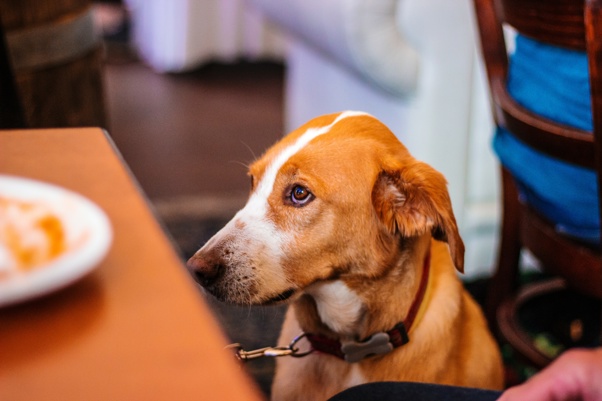
A dog begging may seem like a harmless thing. Those cute puppy begging eyes under the table are hard to resist, right? But this behavior can quickly create frustration for pet owners and confusion for your dog.
The good news? With consistency, patience, and a clear understanding of how dogs think, you can effectively train your dog to stay calm and quiet during your family mealtimes. Let’s break down how to curb begging behavior techniques.
Why Do Dogs Beg?
Before we dive into training strategies, it helps to understand why dogs beg in the first place. Dogs are opportunists. Their ancestors survived by scavenging, and those instincts still run deep in their DNA. If a dog learns that sitting near the table leads to a tasty treat, that behavior will be repeated. In other words, begging isn’t a character flaw - it’s a learned response. That means the power to change it lies in your hands.
Step 1: Stop Reinforcing the Begging Behavior
The main rule of dog training is this: when you reward a behavior, the dog is likely to keep doing it. If you or anyone in your household occasionally slips your dog a bite of steak or a corner of a sandwich “just this once,” you’re sending a mixed message to your pup. Even such minor situations can be enough to reinforce begging.
Pro Tip: Be honest with everyone in your household (kids, or even guests). Establish the rule: no feeding the dog from the table, ever. If even one person breaks this rule occasionally, your dog will keep begging.
Step 2: Teach a “Place” or “Settle” Command
One effective way to stop your dog from begging is to teach them basic hand signals and other ones that will teach your pup to go to a designated area.. You can also show them where to go during meal times.
Here’s how:
- Choose a place: This could be a dog bed, mat, or crate placed a few feet away from the dining area.
- Train the behavior: Use a command like Place or Settle. Lure your dog to the spot with a treat, and reward them for staying there.
- Gradually increase duration: Start with short stays and slowly extend the time. Use a release word like “Okay!” to end the exercise.
- Generalize the command: Practice when you’re not eating first. Then, start using the command at mealtimes.
Tip: Stuff a Kong with some peanut butter or kibble and give it to your dog in their place. It’ll keep them engaged while you eat and reinforces the idea that good things happen away from the table.
Step 3: Ignore the Begging Drama
Dogs will whine, paw, or stare longingly at your plate. But giving in even once reinforces the behavior. If your dog begs, don’t talk to them. Don’t scold. Don’t even make eye contact. Any attention, positive or negative, can provoke puppy begging.
Important: Timing is everything. If your dog walks away and gives up, that’s the moment to reward them. After your meal, praise your dog for staying calm and maybe give them their own dinner. This teaches them that patience pays off, just not at the dinner table.
Step 4: Feed Your Dog Separately and Strategically
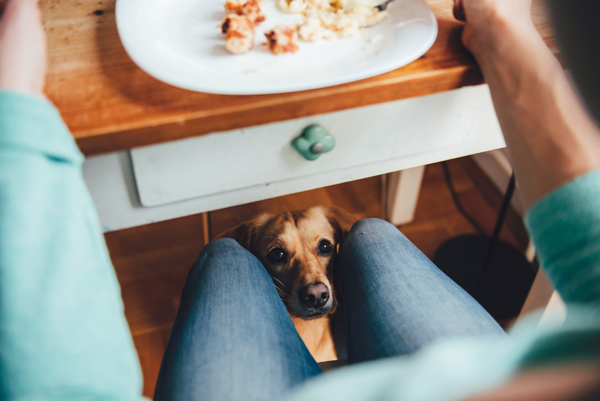
Some dogs beg simply because they’re hungry or anxious about food. To address this, prepare the food amount for your dog in advance, before you eat. A satisfied dog is less likely to pester you at mealtime. Knowing how much dogs should eat, according to size, breed, or age, is also a good idea to prevent the begging situation. Alternatively, if you feed your dog at the same time as the family, do it in a separate room. This creates a parallel mealtime ritual and reduces the temptation to scavenge.
Pro Tip: Use slow-feeder bowls or puzzle feeders. They make meals more mentally engaging and take longer to eat, keeping your dog occupied while you enjoy your food in peace.
Step 5: Reinforce Calm Behavior
Instead of just trying to eliminate begging, focus on teaching an alternative behavior. Calmness, for example, is a trainable state. You can reward your dog for lying down quietly during non-meal times. The more you reinforce relaxed behavior, the easier it becomes to carry that into dinnertime. In fact, positive reinforcement training is one of the most effective ways to shape and encourage calm, polite behavior around food and other triggers.
Step 6: Use Management Tools as Needed
While training is key, sometimes you need a temporary fix, especially if you’re hosting guests or retraining a persistent beggar. Here are a few management strategies:
- Install baby gates so that your pup won't have access to your dining room.
- Crating your dog with a chew toy during meals.
- Put on a leash and tether your dog to a secure spot nearby.
These aren’t long-term solutions, but they can help reduce the chances of bad habits being reinforced while you build better ones.
Common Mistakes to Avoid
- Scolding your dog for begging. Negative attention can still be attention. Worse, it can create anxiety.
- Giving food “after” the meal when your dog has begged the whole time. This teaches persistence, not patience.
- Starting training when you’re already frustrated. Dogs are sensitive to energy. Work on “Place” and calmness when things are quiet, not when everyone’s hungry and distracted.
Final Thoughts
Teaching your dog not to beg is about changing how it behaves during mealtimes. You’re not punishing your dog for being curious or wanting food; you’re helping it learn to be more respectful and relaxed, which is better for both of you.
Remember, stopping begging takes time. It’s a habit you need to replace with better ones. With clear rules, consistent boundaries, and some strategies, even the pickiest eater can learn to behave properly. So next time those big puppy begging eyes stare up at your plate, stay strong, hold the line, and know this: you're not being mean - you’re being a responsible pet owner.


 Harley Grandone

