
Understanding Dog Learning: What Affects Training Success
Teaching a dog new skills - from basic commands to tricks or service tasks - relies on more than treats and patience. The dog's breed, background, and early socialization play a large role in how quickly and reliably they learn. In this article, we explore what science tells us about canine learning abilities, differences among breeds, and how owners can make training effective and humane.
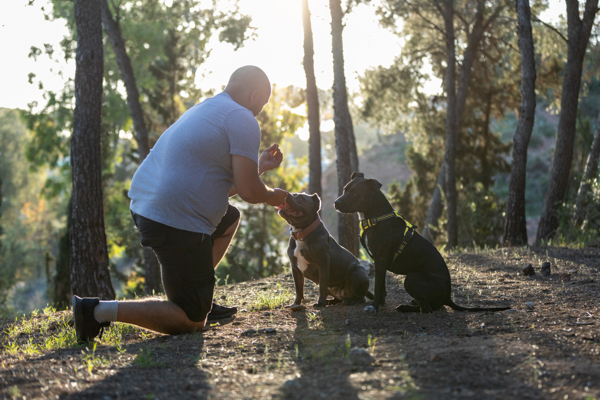
Teaching a dog new skills - from basic commands to tricks or service tasks - relies on more than treats and patience. The dog's breed, background, and early socialization play a large role in how quickly and reliably they learn. In this article, we explore what science tells us about canine learning abilities, differences among breeds, and how owners can make training effective and humane.
What "Dog Intelligence" Means
Researchers describe canine intelligence in several ways. According to experts, three major types are:
-
Instinctive intelligence - the skills a breed was originally bred for (e.g., herding, guarding, retrieving).
-
Adaptive intelligence - the ability to solve problems independently, like figuring out how to get to food or navigate obstacles.
-
Working and obedience intelligence - ability to learn from humans, follow commands, and respond reliably.
When you teach a dog, you tap mostly into working and obedience intelligence - but instinctive and adaptive aspects influence how they respond, too. This means that while a breed might be ranked highly in trainability, the individual dog's curiosity, energy level, and social learning all come into play.
Breed Differences: Are Some Dogs Naturally Easier to Train?
Yes - research and observational data confirm that some breeds tend to learn faster or more reliably than others.
-
A recent study testing 13 dog breeds found significant differences among breeds in social cognition, problem-solving, and inhibitory control.
-
Historically, breeds from "herding" or "sporting" groups (like working dogs) tend to outperform "ancient" or "non-sporting" breeds on trainability and obedience tasks.
-
Breed-average genetic studies suggest that certain heritable genetic traits influence cognitive factors like memory, communication, and inhibitory control.
For example, breeds often cited as highly trainable include Border Collie, German Shepherd, Poodle, Golden Retriever, and Labrador Retriever.
That said, studies also show that breed differences are not absolute. Even within the same breed, individual dogs vary greatly. Early socialization, environment, training methods, and owner engagement remain critical.
Why Some Breeds Learn Faster or Better
1. Breed Background and Genetics
Breeds developed for herding, obedience, or working tasks often carry instincts and genetic predispositions that enhance trainability. Their history may have favored traits like attentiveness to human cues, impulse control, and willingness to cooperate. These qualities, inherited over generations, naturally support the training process.
2. Social Cognition and Responsiveness
Research from the University of Helsinki showed that breeds differ in social cognition - how well dogs interpret human gestures or social signals. That matters because training often depends on communication and responsiveness to owner commands. A dog that's tuned into human body language and tone is more likely to succeed in training.
3. Environmental Factors and Early Socialization
Studies show that while breed and age correlate with personality and trainability traits, social environment - especially early puppyhood experiences and socialization - also shapes a dog's behavior and learning potential. Puppies exposed to a variety of people, surfaces, sounds, and settings are more adaptable and easier to train.
Training Matters: Approach Makes a Huge Difference
Even for an intelligent or highly trainable breed, how you train matters more than just breed. Research comparing training methods found that positive reinforcement (praise, food rewards, play) leads to better obedience and fewer behavioral problems than punishment-based methods.
Using reward-based training improves learning efficiency and also supports a dog's welfare, reducing anxiety or stress. In contrast, forceful or punitive methods may suppress behavior temporarily but create fear, distrust, or even aggression in the long run.
Behavior traits also influence learning outcomes. Dogs rated high on "responsiveness to training" and low on hyperactivity tend to perform better on tasks like scent detection.

The Role of Consistency and Routine
No matter the breed, consistency is one of the most important elements of dog education. Repeating commands, maintaining a clear structure, and reinforcing the same cues across all household members improve understanding. Dogs are pattern-based learners - they thrive on predictable routines.
Frequent short training sessions (5-10 minutes) are often more effective than long, irregular sessions. Incorporating training into daily routines - like having a dog sit before meals or wait calmly before walks - reinforces behavior naturally.
What This Means for Dog Owners
-
Pick a breed with a learning capacity and temperament aligned to your lifestyle.
-
Don't expect breed alone to guarantee success - Even "top dogs" need consistent socialization, gentle guidance, and smart training methods.
-
Use positive-reinforcement training - Rewarding desired behaviors consistently works far better than punishment or force.
-
Start early with socialization - Puppies exposed to varied environments, people, and experiences tend to develop better social cognition and adaptability later.
-
Adapt training to the dog's personality. Energetic breeds may require mental stimulation and structured tasks, while calmer or older dogs may learn at a different pace.
When Extra Help Makes Sense
Training a dog - especially a puppy or a rescue with an unclear background - can be time-intensive. If life gets hectic, balancing work, studies, or other commitments with dog training can be challenging.
What's Next: A Simple Start Plan
-
Choose a breed known for trainability if obedience and learning are priorities. However, it should be noted that any dog can be trained. A person just needs to be dedicated and willing to work with their dog.
-
Begin socialization and basic commands early - within the first months of adoption.
-
Use reward-based training consistently: treats, praise, play - avoid punishment-based methods.
-
Observe and adapt to your dog's temperament: adjust training pace, sessions, and type of tasks accordingly.
-
Keep mental and physical stimulation ongoing - learning doesn't end with basic obedience.
-
Be patient. All dogs learn at their own pace, and small wins add up.
With time, patience, and the right approach, virtually any dog can learn and thrive. Breed differences give clues - but what matters most is how you nurture that learning.


 Fay Smith

