
Evaluating Harnesses for Large Dogs
The right harness is the secret to large dogs’ safety and a positive bond between the handler and the pup. It is one of the most crucial aspects when working with large dogs. The wrong gear can ruin dogs’ gait and growth, and even instill fear toward harnesses and activities in them. This guide introduces the most popular kinds of harnesses for large dogs and helps you make the right choice.
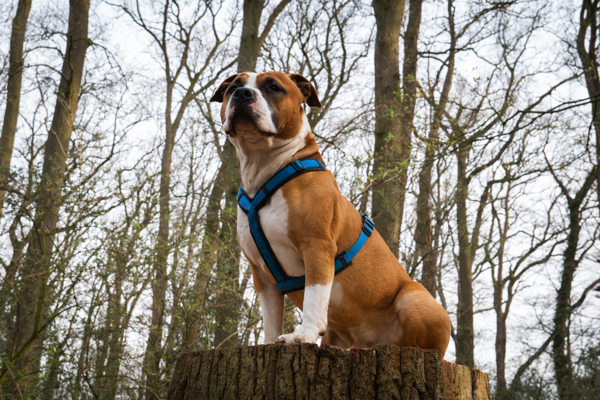
The right harness is the secret to large dogs’ safety and a positive bond between the handler and the pup. It is one of the most crucial aspects when working with large dogs. The wrong gear can ruin dogs’ gait and growth, and even instill fear toward harnesses and activities in them.
The dog harness market was evaluated at USD 5.53 billion (2024) and expected to reach USD 27.12 billion (2032). Choosing the right harness can get confusing in such a huge market.
Therefore, this guide introduces the most popular kinds of harnesses for large dogs and helps you make the right choice.
Types of Harness Based on Attachment
1. Front-Clip Harnesses
Front-clip harnesses have the leash attachment ring at your pup’s chest. While wearing this, when they pull forward, the leash gently redirects their body inward or sideways. It interrupts their forward momentum, making the puller harder to lean in front. Since pulling the front becomes difficult, it teaches your pooch to behave during walks.
This is especially great for large dogs when trained well. Reactive and agitated dogs become more docile when they can’t overpower the owner/handler with sheer pulling force.
Recommended For:
● Large breeds
● Dogs that pull on the leash
● Training sessions to teach loose-leash walking
● Owners who want control without force
Considerations
Poorly designed front clip harnesses are health hazards for your pup. Too high and it’s no better than a collar. Too low and it interferes with their leg movement. Some restrict shoulder movement, ride up, or twist. These issues can harm their muscle growth and bone alignment. Stay cautious from the get-go, especially when dealing with working and athletic dogs.
So, evaluate a good front-clip harness by checking whether it sits evenly on the breastbone. Prioritize the Y-shaped chest piece to prevent unnecessary riding up and twisting.
This type is only for short-term use in controlled environments. Avoid using front clips during hiking, running, or daily use.
2. Back-Clip Harnesses
As the name suggests, the leash attaches to the back of the dog between the shoulder blades in back-clip harnesses. They are the most common ones for their comfort factor. This is because the pressure gets evenly distributed across the chest and torso.
Unlike the front clips, these don’t offer any restrictive features for pullers. Well-fitted back clips
Recommended For:
● Dogs who are already well-trained and behave politely on walks
● Dogs with neck and spinal injuries and tracheal sensitivity
● For long, casual walks, hiking, and daily use
Considerations
Back-clip harnesses do nothing to discourage pulling. Especially if you have a large and strong dog (those for draft or traction work), this kind of harness will give them power over you. The chest piece gives them a comfortable space to lean against while pulling. This worsens pulling behavior. Thus, you must only use these for gentle-mannered and trained dogs.
While buying one, always check whether the harness fits your pup well. If not, the piece rubs on their skin, causing chafing around the armpits.
Some poor-quality back-clip harnesses restrict the shoulder motion, causing muscle and bone growth abnormalities. Ensure that’s not the case.
3. Dual-Clip Harnesses
If you want the best of both worlds, try a dual-clip harness. Dual-clip harnesses have attachment rings on both front and back.
It gives ample flexibility in handling style depending on how you want to respond to a pup’s activities. You won’t need to switch the entire harness for different needs. Clip on the back for laid-back walks and the front for navigating crowded spaces and zones with distractions.
If a pooch reacts unpredictably, use both clips. Many professional trainers prefer this one when dealing with strong breeds.
Recommended For:
● Pet parents with dogs with different personalities
● Pet parents who walk through different environments, needing different control at distinct times.
● Dogs that have been undergoing training and are learning to be calmer, where handlers can transition from front to back clips with time.
Considerations
While dual-clip harnesses are the most technical, they can be difficult to use because of having several straps. If you get the wrong design or an ill-fitting model, it can trap excess heat and cause friction and chafing. Thus, double-clips are challenging to use in warm climates.
You also need proper experience to manage a double-ended leash skilfully. Otherwise, the leash can get tangled on itself or around your dog. It may take a while to get used to pulling the right leash according to the scenarios. Often, new owners pull both together or the opposite of what is needed.
While choosing, prioritize the good construction of the harness. It must be able to withstand force from both points without putting pressure on the seams or undoing buckles.
4. No-Pull Harnesses
No-pull harnesses have front clips for the leash, tightening straps, or gentle pressure to discourage pulling behavior.
The straps of these harnesses loop around the chest so you have complete control over the dog’s shoulder and chest direction. It’s great to guide them to pay attention to a specific direction.
Recommended For:
● The strongest breeds that are known to be serious pullers and overpower handlers
● Reactive dogs
● Dogs in rehabilitation that need guidance for safety
● Dogs that often face safety-critical scenarios
● Owners who need temporary behavior management during training
Considerations
Since no-pull designs come with tightening mechanisms, inexperienced owners mistakenly fasten them too tightly instead of focusing on training and behavior guidance. This is something new pet owners must be cautious of.
Poor fitting and improper usage can cause discomfort like neck strain. Dogs then start to fear the leash. They show avoidant signs or grow stiff at the sight of it. Thus, it is always recommended to introduce these with the help of an experienced trainer or behaviourist.
The only right use of no-pull harnesses is using them as a transitional tool instead of a permanent one. These must not be used regularly for daily walks.
Types of Harness Based on Fastening
5. Step-In Harnesses
In step-in harnesses, a dog needs to place their front legs in the dedicated loops. Only then can you fasten the harness.
Recommended For:
● Calm and cooperative dogs
● Dogs who dislike headgear
Considerations
Step-ins don’t have structural reinforcement. So, they are not recommended for stubborn, reactive, and strong dogs. They can twist the harness with pressure. These also allow the dog to escape while wearing.
6. Overhead Harnesses
Overhead harnesses are slipped over dogs’ heads and fastened at the torso. Overheads offer much more stability and offer minimal escape points. These ensure better weight distribution across the gear, ensuring no excessive pressure at a single point. They also don’t cause shifting or sliding during energetic activities.
Recommended For: Strong and reactive dogs
Considerations: Overheads are not suitable for sensitive dogs who dislike gear over their heads.
Types of Harness Based on Ergonomics
7. Y-Front Harnesses
Y-front harnesses create a Y-shape at your pup’s chest. This ensures no restrictions around the shoulders. They promote the natural growth and gait of your dog.
Recommended For:
● Active and athletic large dogs that run, hike, or work a lot
● Dogs with joint issues
● Owners still training their dogs
Considerations
The most common drawbacks of Y-fronts are that they often get misaligned if not adjusted properly, pushing the soft neck tissue and causing an uneven gait. If the harness is poorly designed, it can even cause friction and chafing.
8. Chest Panel Harnesses
Chest panel harnesses feature a horizontal panel across your pup’s chest. The greater surface area distributes the pressure evenly. So, no particular muscle or bone experienced excess stress.
Recommended For:
● Strong pullers and lungers
● Reactive dogs
● Dogs with sensitive skin
● Breeds with a deep chest
● Handlers with limited physical strength
● Owners who go on frequent adventures and nighttime walks
Considerations
Chest panel harnesses, when they sit too low or wide on the pup’s chest, can interfere with shoulder rotation. This restricts the movement of large dogs with long strides.
Types of Harness Based on Specialized Utility
9. Tactical Style and Load-Bearing Harnesses
Tactical and load-bearing harnesses are specialized for service dogs, working dogs, and dogs in high-control environments. These come with thicker padding, reinforced handles, and several attachment points.
Recommended For:
● Owners needing mobility assistance, guidance
● Dogs needing to be lifted over obstructions
● Search and rescue dogs that often jump over or lunge
Considerations
Tactical and load-bearing harnesses should not be used daily. They are heavy and cause fatigue or overheating.
Things to Look for when Picking a Harness
Pressure Distribution
Make your pup wear the harness and run your hands across its insides to feel for narrow or pointed pressure points that can cause digging or cutting. The harness must be wide and have no pressure points. All the pressure must be on the horizontal strap on the breastbone and the rib panels.
Freedom of Movement
Watch your pup walk, trot, and reach in the harness. They must be able to move freely with their shoulder blades going back and forth comfortably. If the horizontal strap sits right on their shoulders, switch to another. Otherwise, it’ll change their gait.
Material and Construction
Prioritize nylon or polyester material of high denier. The webbing must be at least 1 inch. The harness must have double/triple seam stitching with heavy-duty thread. Leash ring attachments must have bar-tacking reinforcements. Ensure the hardware can bear more force than your dog.
Conclusion
Often, people assume that large dogs just need a larger gear. But it’s not just size. You must ensure even pressure across the harness, ample room for movement, comfortable material, and tough construction. Furthermore, remember to match the harness type with training goals, and you’ll find the right one in no time.


 Muhammad Saad

