
6 Things to Consider Before You Begin Dog Obedience Training
Initiating dog obedience training will prove meaningful to your dog and harmonious coexistence in your home. While cues such as sit and stay do sound simple, the actual training needs advanced levels of preparation beyond simply crunching on treats over and over. Here are six important considerations to weigh in on for starting dog obedience training.
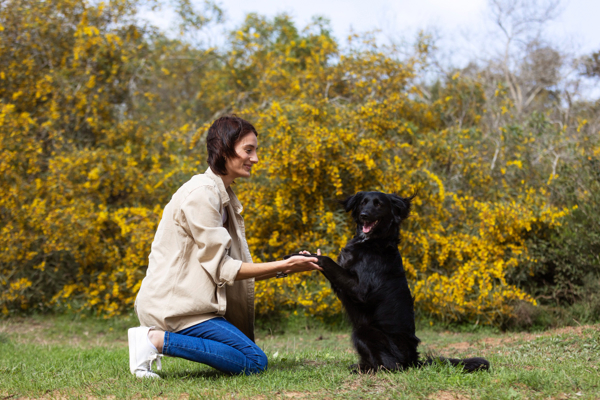
Initiating dog obedience training will prove meaningful to your dog and harmonious coexistence in your home. While cues such as sit and stay do sound simple, the actual training needs advanced levels of preparation beyond simply crunching on treats over and over. Training might be halted in its tracks or made successful due to your dog's growth levels, emotional makeup, as well as your own level of consistency. Planning is not just a way to avoid frustration, but also allows you to map out realistic aspirations on day one. Here are six important considerations to weigh in on for starting dog obedience training.
The Age and Developmental Stage of Your Dog
Age matters, but not quite in the way that many owners imagine. While puppies are very receptive to the process of learning, they have, at the same time, shorter attention spans and lower impulse control. Therefore, training sessions for the puppy should emphasize short training sessions and basic behaviors. Older dogs can learn new things, but sometimes they will sneak in old habits that will take a considerable amount of patience and modifications instead of repetitions of commands and cues. Incorporate also emotional and physical maturity. A dog that is recovering from illness or injury or has recently been homed may not be ready for work requiring obedience.
Professional Guidance and Local Resources
Some owners are able to do training on their own, but most work with professionals in areas of behavioral issues. A good trainer will pick up on all those subtle cues, like stress signals or timing-in reinforcement errors that would be missed. This input is often time-saving and forestalls the situation whereby a minor issue escalates to significant proportions. For those in or around Richmond, VA, having access to training classes and instructors can make a marked difference in results. Good Dog training Richmond VA, will guarantee that your dog is trained in an environment that is well-controlled and supportive, introducing real-world distractions while adhering to humane and evidence-based practices.
Temperament and Breed Tendencies
Every dog has a unique personality that determines how they learn. While some dogs work for food motivation, others are independent thinkers who find rewards fun and the environment acceptable for training. Knowing what makes your dog corporate allows you to push that rather than have a universal model. There are breed tendencies that influence the expectations. For instance, some herding breeds might be focused enough on stationary tasks, but motion might not get their attention. A scent hound usually requires more work for recall. Once these tendencies are understood, it is possible to set realistic goals for yourself, minimizing those typical false positives tied to normal behavior and, thus, separating bad vices from disobedience.
Your Training Goals and Lifestyle
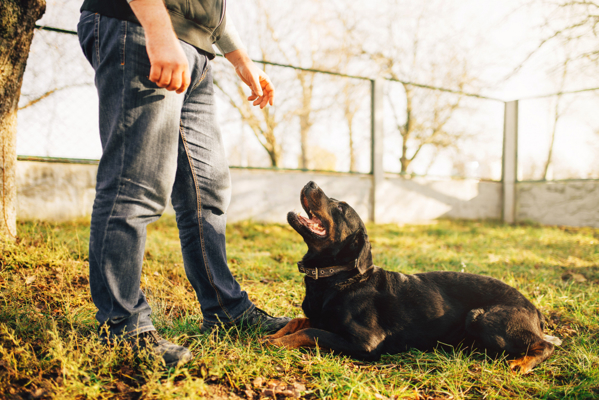
You could be after just a few home manners, reliable and reasonable off-leash control, or preparing for some therapy or sport work. Time, techniques, and precision levels of different magnitudes are required to achieve each stated goal by the trainer. Vague goals diminish the accuracy of training time and consistency, thereby giving mixed signals to the dog and making motivation on the part of the trainer weak. Your lifestyle must realistically support those goals. Long working hours, frequent traveling, and a busy household may limit any consistency training, which is critical to success. Better to engage in small daily practice than in a program that is expected to be a strenuous one, as it will become unsustainable.
Environment and Distraction Levels
Where you train is equally essential as the kind of training you give. Dogs cannot generalize a behavior-this much learned cue in the living room does not necessarily transfer to the park. A distractionless training setting, along with basic cues, would be the place where you would want your dog to start learning. Onward, you gradually expose your dog to greater degrees of difficulty. Distractions should gradually become part of the training, and noises, moving things, other dogs, and strange people are all good tests of reliability. Otherwise, the dog may know the commands but can't apply them at that crucial moment.
The Consistency from Everyone
Dogs account for clarity, while inconsistency is the fastest way to destroy training. If one person allows jumping while another corrects it, both signals only serve to confuse the dog, who defaults to the one most rewarding. Whole household agreement on rules, signals, and reinforcement must be achieved before the beginning of the training program. Both these relate to timing, and the fact that emotional control in reinforcement or punishment given late confuses learning. A calm, predictable course of response will build an association in the dog's mind between actions and the outcome, accelerating learning and building quite a strong foundation of trust to turn to.
Conclusion
Dog training actually begins before the utterance of the first command. Such systematic planning and realistic expectations should create every opportunity for it to be sustained and humane. Individuality of the dog, environment, and resources made available to you are considerations here. Your advanced preparation will not only maximize the chance for success but also enhance trust and communication between you and your dog.


 Lilia Sydor

