
Collars vs. Harnesses for Puppies: What Breeders Recommend
Breeders and trainers agree: gear choice isn’t just about looks. It directly impacts your puppy’s safety, training success, their personality, and your relationship with them long-term.
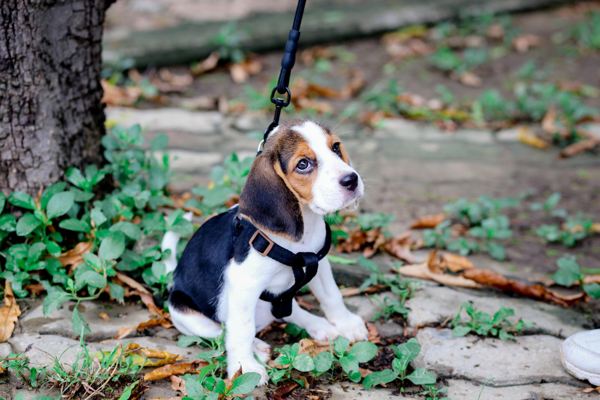
Bringing home a new puppy is like welcoming a tornado in fur. One moment, they’re curled up asleep and you think your heart will burst from cuteness; the next, they’re peeing on your expensive rug, as if being a pee pad was its original purpose, leaving you wondering why you thought this whole puppy thing was a good idea. Amid the chaos of teething toys and potty training, one of the first big questions of how you’re going to turn this terror into the best family dog ever arrives: Do you start with a collar, a harness, or something in between, like a martingale? Ask five different puppy parents and you’ll get five different answers, but breeders and trainers agree: gear choice isn’t just about looks. It directly impacts your puppy’s safety, training success, their personality, and your relationship with them long-term.
Why Gear Choice Matters for Puppies
Puppies are rapidly growing; their trachea, spine, and joints are still developing. Pressure from a collar, especially if they’re pulling, can cause tracheal irritation, coughing, and even collapse. In fact, many dogs instinctively pull harder when their throat feels restricted. Trainers call this the Opposition Reflex: when pressure is applied to the neck or chest, a dog naturally leans into it. That’s why dogs on flat collars often lean into the pressure, dragging owners down the sidewalk, or try to back out of their collars. It’s not defiance; it’s discomfort. This is where harnesses and martingales can make a life-changing difference.
Collars: The Everyday Essential
Flat collars are still the “first wardrobe piece” for most puppies. They’re lightweight, easy to fit, and the perfect place to hold ID tags. A simple buckle collar makes sense for potty breaks and lounging at home, but for walking? That’s where you need a bit more support. Collars put all the force of pulling into one vulnerable spot: the neck. While it may be fine for calm adult dogs who already have leash manners, for puppies, it’s like trying to learn to drive on an icy road. There’s too much risk and too little room for error. Best practice: keep collars on for identification and light use, but transition to safer gear for walks. For fit, always use the “two-finger rule”: you should be able to slide two fingers between the collar and the neck.
Harnesses: The Safer Starting Point
Harnesses are like training wheels for leash walking. They distribute pressure across the chest and shoulders, sparing the neck from harm. For many breeders, this is the “first real walking gear” they recommend. The benefits are clear: less strain on developing necks, reduced escape risk with designs that include an extra belly strap, better control in busy environments like parks or pet stores, and options like front-clip harnesses that gently redirect pulling without pain. Fitting your puppy’s harness as they grow is critical. Measure both chest and neck before buying and use the “two fingers” rule—snug but not tight. Recheck the fit weekly since puppies outgrow gear quickly. Putting it on can even become part of training. Offer a treat each time the harness slips over their head, clip, reward, repeat. Soon, your puppy will wiggle with excitement at the sight of it. Escape-free harnesses add an extra belly strap for security which is perfect for wriggly pups who like to test limits.
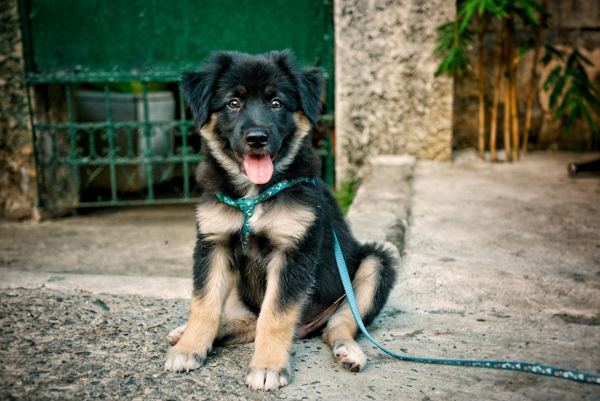

Martingale Collars: The Middle Ground
Martingale collars are the “in-between” option. Safer than choke chains and more secure than flat collars, they tighten slightly when a dog pulls, preventing escape without choking. They won’t, however, prevent pulling. Originally developed for breeds with slim heads like Greyhounds, they’re now widely respected for secure, humane training. These collars shine with puppies who are little Houdinis at slipping collars. They’re a great choice for supervised training sessions when you need extra control, but martingales aren’t “set it and forget it.” They should never be left on during playtime, crate time, or unsupervised moments, since the loop can catch on objects. For everyday wear, go back to a standard buckle collar.
Growing Up: Transitioning Gear Over Time
One of the joys of raising a puppy is watching them grow into their oversized paws and floppy ears. But growth brings constant gear adjustments. A harness that fit last week may now rub behind the front legs. A collar may suddenly feel tight. Here’s a quick growth-fit routine: weekly, slide two fingers under the collar or harness straps. If it’s tight, loosen or size up. Training milestones can also guide gear choices. Start with a harness for control, a martingale for practice sessions, and eventually a flat collar for mature, well-trained walks.
Final Thoughts
There isn’t a single “right” piece of gear for every puppy. Instead, think of collars, harnesses, and martingales as a toolkit. Harnesses protect developing bodies and make early walks safer. Martingales offer controlled training for escape artists and slim-headed breeds. Flat collars are perfect for IDs and everyday supervised wear. By rotating these tools with intentional training sessions, you’ll protect your puppy, avoid injury, and build a foundation of positive leash habits that last a lifetime. Most importantly, you’ll make those first adventures together less about tug-of-war and more about joy, discovery, and bonding.


 Fay Smith

