
How Clicker Training Transforms the Way We Communicate With Dogs
Puppy training is not just about getting commands; it's about creating a bond of trust, understanding, and clear communication. One approach has proven to be the most effective and has the most beneficial influence: clicker training. This easy and effective method has developed into a contemporary tool for dog training that not only establishes positive behavior but also enhances the bond between dogs and owners.
Puppy training is not just about getting commands; it's about creating a bond of trust, understanding, and clear communication. One approach has proven to be the most effective and has the most beneficial influence: clicker training. This easy and effective method has developed into a contemporary tool for dog training that not only establishes positive behavior but also enhances the bond between dogs and owners.
In this article, we’ll explore what clicker training is, how dog clickers work, why the dog clicker sound is so effective, and how clicker training technology is transforming canine communication.
What Is Clicker Training?
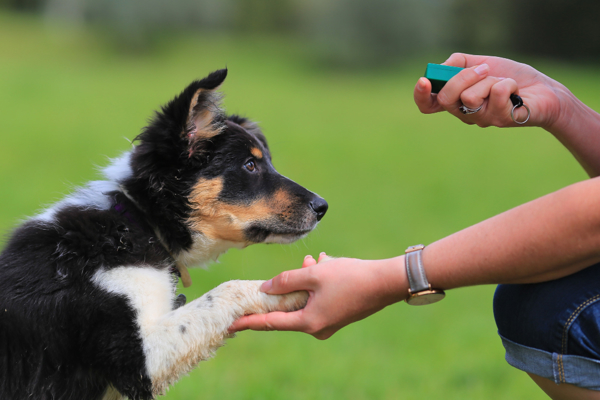
Clicker training is a method of positive reinforcement dog training. It employs a small hand-held device, called a dog clicker, which produces a unique sound when pressed. The sound serves as a marker, a notification to your dog that they've gotten something right, followed at once by a reward such as a treat, toy, or compliment.
In contrast to verbal commands, which can be variable in timing or tone, the sound of the dog clicker is crisp, consistent, and easy for dogs to identify. This ensures faster and less complicated learning on your pet's part.
How Does a Dog Clicker Work?
Most owners wonder: What is a clicker, and why is it so effective? The science revolves around the principles of operant and classical conditioning.
Step 1, Association: You first associate the sound of the clicker with a reward. For every click, you immediately reward your dog with a treat. In no time, the dog knows that a click = good behavior = reward.
Step 2, Marking behavior: After establishing the connection, you can utilize the click to label the specific point at which your dog exhibits the action you want them to do (such as sitting).
Step 3, Reinforcement: Since the click accurately marks the desired action, your dog learns much quicker than with delayed compliments or unclear signals.
To put it briefly, the click fills the gap between the action and reward, and training becomes more efficient.
Why the Dog Clicker Sound Matters
The dog clicker sound is not mere noise, but a scientifically established marker. A voice, as opposed to a click, can be colored by mood, tone, or volume. A click, on the other hand, is consistently the same pitch and volume, a neutral signal, and an instant marker of the precise behavior. This reliability is what makes clickers superior to verbal markers like “good boy” or “yes.”
Using Clicker to Train a Dog: Step-by-Step
If you’re new to this method, here’s a simple dog training guide to get started:
- Introduce the Clicker. Click, then treat. Repeat 10–15 times until your dog perks up at the sound.
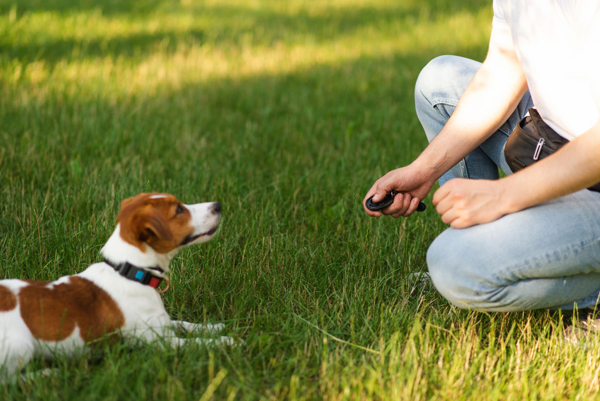
- Start Small. Have your dog do a simple behavior, such as "sit." The instant they sit, click, and reward.
- Add Complexity. Employ the clicker to shape behaviors such as "stay," "come," or "down."
- Teach Tricks. After basic commands are learned, you can employ clicker training for playful behaviors such as "spin," "shake," or "roll over."
- Phase Out Treats. Gradually decrease food rewards and substitute with praise or toys, but maintain the click as the marker.
How Clicker Training Communicates
More Clear and More Consistent Signals
Old-fashioned commands are inconsistent in tone, timing, or volume, often confusing canine listeners. Clicker technology makes a neutral, precise sound each time, allowing dogs to immediately understand that they've made a correct response. This eliminates miscommunication and enhances the level of understanding.
Timing That Matches How Dogs Learn
Dogs learn cause-and-effect in seconds. A slow "good boy" might not catch the moment, but a click gives immediate feedback. Technology-boosted clickers provide accuracy, talking to how dogs learn naturally.
Less Emotional Miscommunication
Words are usually imbued with human feelings, stress, or frustration, which dogs may misread. A clicker is a peaceful, mechanical cue, removing emotional background noise. This enables dogs to "hear" the intent clearly, establishing trust and reducing tension when being trained.
Building a Shared Language
Dogs come to recognize the click as success over time. This shares a "language of reward" so that training is no longer one-way command, but a two-way dialogue. The clicker closes species gaps, making obedience collaborative.
Common Mistakes to Avoid
Even with the best technology, mistakes can slow progress. Avoid these pitfalls:
- Clicking too late may reward the wrong action.
- Over-clicking, leading to confusion.
- Forgetting to pair the click with a reward consistently.
- Expecting results without regular practice.
Final Thoughts
Clicker training has evolved a lot from mechanical gadgets to high-tech devices, but its effectiveness comes from the same concept: clear, consistent communication between you and your dog.
Whether you're establishing fundamental obedience, challenging tricks, or eliminating problem behavior, integrating clicker training technology can reshape your relationship with your dog.
So if you’ve ever wondered how to use a dog clicker, now is the perfect time to start. With the right tools and techniques, every click becomes a step closer to a well-behaved, happy dog and a stronger bond between you and your best friend.


 Muhammad Saad

