
The Most Famous Dog Paintings In History
Dogs have always fascinated artists, and for good reason: we love our canine companions. Check out our list of 10 of history’s most famous dog paintings.

People love their dogs. Artists from old masters like Jan van Eyck to modern digital painters have realized this and made our furry friends a core subject of their work. The most famous dog paintings in history blend our adoration of our canine companions with moral comments, producing works of art that stand amongst the most iconic.
Why Dogs Have Been A Popular Subject In Art
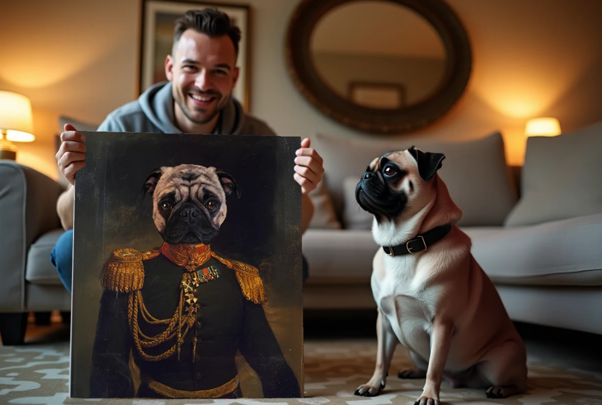
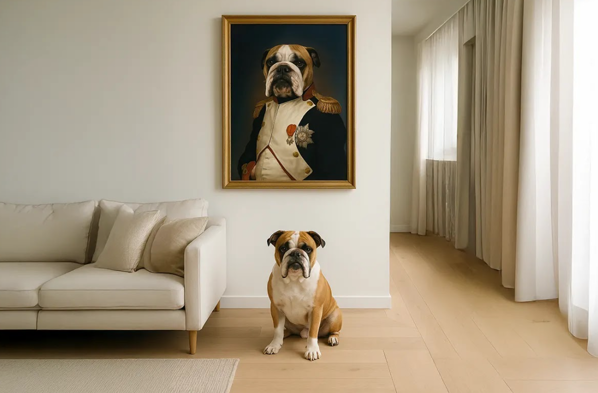
As we said, people love dogs- they’ve been our companions for a very long time. Artists often use them as a visual shorthand for certain qualities that we tend to assign to them: loyalty, bravery, and faithfulness. Today artists use digital painting to help owners show their love for their furry friends, often showing them in a loving, yet comical light, dressed in historical costumes. These modern takes on Victorian, Renaissance, and classical paintings often take the form of royal pet portraits. Depicting dogs in regal attire appeals to the modern sense of humor. While modern works are generally all in good fun, artists are continuing a tradition that first emerged in the rock art of the Neolithic. Dogs have been a key part of life, helping us hunt, herd and providing friendship, for thousands of years. It’s no wonder that there are so many famous dog paintings.

What Are the Most Famous Dog Paintings in the World?
Paintings of dogs range from the slightly surreal image of dogs playing poker to classical images of our loyal companions and everything in between. To list all the famous dog paintings by famous artists would take a lifetime, so here’s a condensed list of the most important:
The Dog –Francisco Goya c.1819-1823
The Dog by Goya (El Perro in Spanish) is one of the artist’s famous Black Paintings, which were daubed directly onto the walls of his home while he was suffering acute mental distress. This series was never intended for public consumption but has become a keystone in art history since its discovery. The dog in the image is small, struggling to keep its head up above the dark shape that consumes it. There have been many interpretations of the image, but the most common is that the dog represents man’s struggle against dark forces and the artist’s hopelessness.
A Friend In Need – Cassius Marcellus Coolidge, 1903
Probably the most famous dog painting by Cassius Marcellus Coolidge and almost certainly the most parodied image in this list, A Friend In Need is the famous Dogs Playing Poker piece. It’s part of a series of sixteen oil paintings originally commissioned to advertise cigars. The series has been referenced in everything from The Simpsons to Snoop Dogg videos.
The Arnolfini Portrait- Jan van Eyck, 1493
Often regarded as one of the most incredibly executed paintings of the Renaissance (a period known for its incredible artistic expression), the Arnolfini Portrait, now hanging in the National Gallery in London, is most commonly remarked on for the artistry displayed in the reflection. However, another key element comes in the form of the couple’s small dog. In this example of a dog in famous paintings, the small terrier stands protectively at the feet of his mistress, showing the loyalty and affection we associate with animals. He also serves to draw the eye towards her pregnant belly through the line of her dress, bringing an air of familial love to the painting.
Dignity and Impudence- Sir Edwin Landseer 1839
Perhaps the most famous dog painter of them all, Landseer, created numerous paintings featuring our favorite pets. Dignity and Impudence perfectly sums up the Victorian sentimentality towards their loyal companions, capturing the character of both dogs. The image subtly parodies the Dutch tradition of framing the subject in a door or window, showing the dignity and personality of both dogs (which belonged to his friend and manager, Jacob Bell).
The Old Shepherd's Chief Mourner – Sir Edwin Landseer 1837
Another example of dogs in famous paintings by Landseer is just as sentimental as his other works but in a much more mournful sense. In The Old Shepherd's Chief Mourner, the dog is shown pining for his master, draping his head across the coffin. This piece speaks to the close bonds between man and dog, reminiscent of that other Victorian story, Grey Friars Bobby, and highlights the two-way emotional attachment we feel towards our pets.
Portrait of Maurice, The King’s Dog – Rosa Bonheur, 19th Century
Rosa Bonheur became famous for her paintings of animals and their relationships with humans. She painted horses, rabbits, stags, and even lions, producing works of almost photorealistic beauty. Her works were appreciated on both sides of the channel, earning her the patronage of Queen Victoria and the Legion of Honour in her native France. While her work covering horses and the fading Highland way of life earned her plaudits during her lifetime, it’s her work on dogs that earns her a place on this list. Sentimental imagery, blended with acute anatomical observations, marks her out as one of the most skilled and famous dog painters.
Dash, The Queen’s Spaniel- Sir Edwin Landseer
Nothing quite encapsulates the affection the Victorians held for their pets quite like the portrait of Dash gifted to the Queen herself for her birthday in 1836. Painted by none other than Sir Edwin Landseer, perhaps the most famous animal artist of the day, the painting shows Victoria’s “dear little Dashy.” The work demonstrates, like many of Landseer’s paintings, just how important dogs have been in our lives, from the very working class up to the peaks of nobility.
The Hunter’s Companion – George Stubbs, Late 18th Century
George Stubbs was a largely self-taught artist and influential in the Romantic Movement. He covered all the usual subjects of the day but his most famous works all revolve around animals, especially hunting scenes where both horses and dogs feature prominently. Throughout his works, he focuses on anatomical accuracy and scene setting, blending realism and Romantic imagery.
Dog Lying In The Snow – Franz Marc, 1911
Another artist with a fascination for animals, Franz Marc’s most iconic dog painting, is Dog Lying in the Snow. The piece represents a stylistic shift from the artist, dropping realism in favor of something more playful in terms of shape and color, verging closer to cubism than traditional styles. The painting shows his own pet, Russi, lying asleep on the ground, representing his pure and peaceful nature.
Self Portrait With Dog – Gustave Courbet, 1842
One of the first paintings from Courbet to be accepted by the Paris Salon, this self-portrait shows the artist and his pet. Here, the dog becomes part of the bohemian lifestyle the artist is trying to represent, an accessory as much as a companion. They say that owners start to resemble their dogs, and this painting really does show this to be true.

The Evolution of Dog Paintings in Modern Times
While all the sentimentality and symbolism are still there, today, we often take a slightly more tongue-in-cheek approach to pet portraiture. We’re just as likely to present our darling companions in historical costume, taking a more caricature approach to showing off their personalities. These images draw on the eons of art history that come before them and, as great art has always done, subvert them into something distinctly modern. We still see classical styles hanging in galleries, but thanks to digital techniques making art more accessible, we now see them in our homes, too.
Final Words
Dogs have always been worthy subjects for artists, from our earliest sketches on cave walls to the ultra-modern digital images that plaster our social media profiles and homes today. As long as our beloved pets are by our side, we’ll keep turning their love and loyalty into beautiful works of art.


 Muhammad Saad

