
G.L.A.D.: The Easy Steps for When You See a Service Dog
In the United States, we have a dog culture that centers around pets that are universally friendly and available. The impact of this public appreciation and ownership, however, is not necessarily beneficial for disabled people who use service dogs. The acronym G.L.A.D. can help us remember how to approach (or not) when a service dog pops up in a public space.
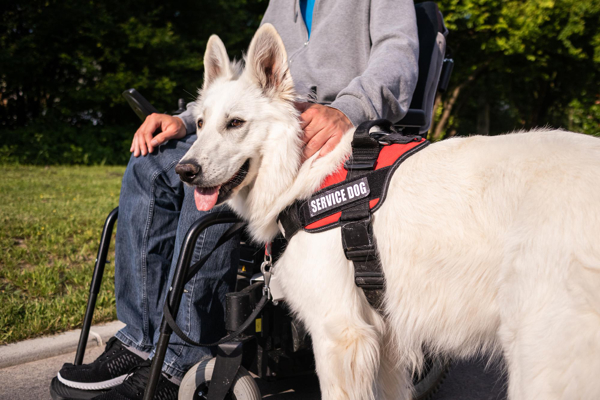
In the United States, we have a dog culture that centers around pets that are universally friendly and available. The impact of this public appreciation and ownership, however, is not necessarily beneficial for disabled people who use service dogs.
What to Know About Service Dog Teams
A service dog, as defined by the Americans with Disabilities Act (ADA) can be any breed of dog trained to have impeccable public behavior, as well as aid a disabled person with one or more concrete tasks, and is thus allowed in almost all public settings. A “task” is a trained behavior that mitigates some aspect of disability. A “service dog team” refers to the service dog and their handler.
If we think about service dogs “in the wild” in public, they are allowed that access because of their training and their responsibilities, which deserve respect. Service dogs are also an extension of that handler’s body in much the same way that a cane or a wheelchair would be. This means that it is best practice to allow the user of the assistive support their autonomy. When we frame the conversation this way, we can then set up some practices that will allow service dogs to do their job and ultimately lead to better interactions between dog enthusiasts and handlers. The acronym G.L.A.D. can help us remember how to approach (or not) when a service dog pops up in a public space.
G: Give Space!
First things first! Try not to rush a service dog team! Remember, some handlers have complex physical and mental health concerns where surprises could trigger symptoms. You wouldn’t run up and begin stroking a disabled stranger’s arm without permission. Try not to engage with working teams immediately, but instead give some space and admire from a distance. A disabled person’s health is more important than anyone’s interest in their service dogs. The point is to see the person before the dog when our puppy-love goggles have been activated.
L: Look, Listen, and Learn!
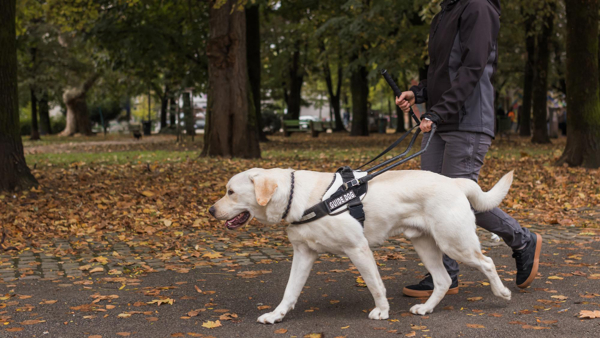
Look for the identifying information on the service dog! While it is not required by the ADA, many service dog handlers choose to have their dogs wear identifiers (capes, harnesses, and patches) that inform the public about how to engage, or not engage, with their dog. Since space has already been given, there is now time to read any provided information. If there are signs such as “Do not pet” or “Do not interact,” the handler is using identifiers to give clear communication and guidelines for their service dog.
Listen! The service dog handler may also notice a stranger’s interest and give verbal instructions. Many service dog handlers do not allow petting when their dog is working. If they do, reading those patches and listening to their words are the key to being respectful. A few handlers may have a process for allowing their dog to greet people, but it is important to let that handler both offer and disseminate that information.
Learn- It is amazing to see a service dog in action, and being a service dog handler is a unique way to help with symptom management of many chronic conditions. It can also take two full years to train a service dog, and cost upwards of twenty thousand dollars, which most times isn’t covered by insurance. These pups are highly intelligent, obedient, and dedicated to their jobs, but they are also given plenty of time to just “dog” in their off-time. It is a drastically different scenario than taking your household pet to the treat store to pick something out! A great way to scratch the itch of asking questions to a team in public is learning about service dogs and the ways that they have been part of our history.

A: Accept a boundary.
This is the greatest way that we can build our relationship with the service dog community. If you have Given Space, and then Looked/Listened/Learned from the handler, and it is very clear that this person isn’t available for encounters, quietly observe the dog and move on. There will be so many dogs to see and pet in a lifetime. There isn’t a good reason to ask to pet the dog if the first two steps have clarified the handler’s boundaries. It’s also very important to allow service dog handlers to keep their medical history private. Someone’s medical information is vastly less important than treating them with equity, including keeping probing questions out of the conversation. In short, do not ask “What do they do?” or “What service do they provide?”
D: Disability Rights Advocacy is for Everyone!
It is in everyone’s best interest to advocate for accessibility. There are even clear, specific questions from the ADA to confirm a service animal for folks who encounter a dog while on the job. Service dog teams should expect these questions and may even sigh in relief that staff know the rules too! Service dogs are also utilized by handlers under 18, so preparing for how to engage can create much more welcoming classrooms, medical offices, and even playgrounds. Teaching children about the GLAD steps is just one good step in learning allyship to disabled service dog handlers, but there is so much more to consider and involve.
Final Thoughts
It can be that much easier for service dog teams every day to navigate a public where the human is at the forefront. While dogs have been assisting humans for centuries, service dogs wouldn’t exist without disabled people. By putting those people first in interactions, there will be better engagements and allow these amazing dogs to continue to do their jobs effectively.


 Fay Smith

